
Service bays are some of the harshest work environments in the automotive industry. Constant vehicle rotation, heavy equipment, oil spills, chemical exposure, hot tires, and nonstop foot traffic make flooring one of the most critical—and most abused—surfaces in the shop.
Traditional concrete doesn’t stand a chance.
Even standard epoxy struggles under these extreme conditions.
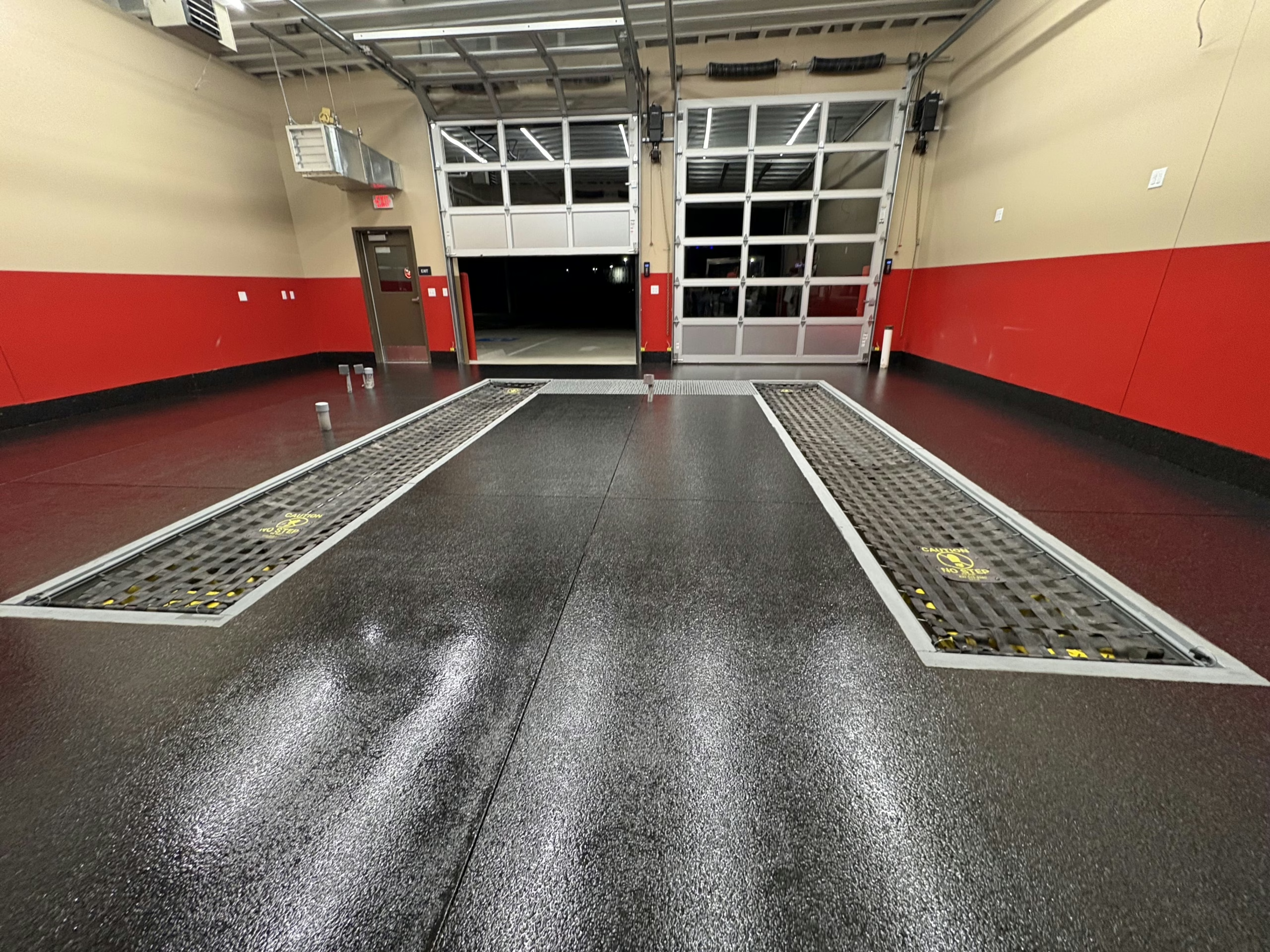
That’s why automotive facilities across Oklahoma City, Edmond, Norman, Moore, and Yukon are switching to polyaspartic epoxy flooring systems from Zone Garage OKC — the strongest, longest-lasting, and most efficient flooring solution for service bays of all types.
Here’s why polyaspartic epoxy outperforms every other flooring material in service bay environments.
1. Unmatched Durability for Heavy Automotive Traffic
Service bays must handle:
- SUVs, trucks, and fleet vehicles
- Rolling toolboxes
- Lifts
- Air compressors
- Jacks and jack stands
- Power tools
- Constant vehicle movement
Polyaspartic epoxy provides industrial-grade strength with compressive ratings far beyond traditional coatings.
✔️ Scratch-resistant
✔️ Impact-resistant
✔️ Chip-resistant
✔️ Hot-tire resistant
It’s engineered to survive years of demanding auto shop conditions.
2. Superior Chemical Resistance Against Automotive Fluids
Service bays deal with fluids that can destroy most flooring systems:
- Motor oil
- Gear oil
- Brake fluid
- ATF
- Diesel & gasoline
- Coolant
- Degreasers
- Harsh cleaners
Polyaspartic epoxy is fully chemical-resistant, meaning spills don’t penetrate, stain, or weaken the floor.
Cleanup becomes effortless — a huge advantage for high-volume service centers.
3. Fast Cure Times Reduce Downtime for Busy Shops
Time is money in automotive service environments.
Polyaspartic coatings cure much faster than traditional epoxy — often in hours instead of days.
Benefits include:
✔️ Overnight or weekend installation
✔️ Minimal disruption to business
✔️ Faster return to full operation
✔️ Perfect for high-volume dealerships and repair shops
Zone Garage OKC can complete many service bays in one day.
4. UV Stability for Drive-In Service Areas
Many service bays in Oklahoma have:
- Roll-up doors
- Open bays facing the sun
- Indoor/outdoor hybrid layouts
Traditional epoxy yellows or fades when exposed to UV light.
Polyaspartic epoxy, however, is 100% UV-stable.
✔️ No discoloration
✔️ No fading
✔️ No chalking
✔️ No yellowing at entry points
Your floors stay bright and uniform for years.
5. Hot-Tire Resistance for Constant Vehicle Flow
Vehicles entering the service bay often have extremely hot tires, which cause:
- Peeling
- Lifting
- Tire marks
- Adhesion failure
Polyaspartic epoxy is specifically engineered to withstand:
✔️ Hot tire pickup
✔️ Friction
✔️ Sudden temperature swings
This makes it perfect for dealerships and quick-lube service centers.
6. Slip-Resistant Texture for Safer Work Conditions
Safety is crucial in service bays.
Oil, water, coolant, and spills can create dangerous working conditions.
Zone Garage OKC adjusts traction levels using:
✔️ Quartz
✔️ Silica
✔️ Grip additives
✔️ Textured polyaspartic finishes
This significantly reduces slip hazards, improving worker safety and OSHA compliance.
7. Resistant to Heat, Humidity, and Oklahoma’s Weather Extremes
Service bays often experience:
- Hot, humid summers
- Dust-filled wind
- Sudden cold fronts
- Moisture from storms
- Rapid temperature changes
Polyaspartic epoxy is designed to flex with the concrete and maintain adhesion in Oklahoma’s extreme climate.
✔️ No peeling
✔️ No bubbling
✔️ No cracking
Just long-term, reliable performance.
8. A Bright, Reflective Finish That Improves Visibility
Lighting is everything in a service bay — it affects:
- Inspection accuracy
- Technician safety
- Labor speed
- Overall workflow
Polyaspartic epoxy offers a high-gloss reflective surface that enhances visibility dramatically. It makes the entire shop look:
✔️ Cleaner
✔️ Brighter
✔️ More professional
Dealerships especially love this upgrade because it elevates the customer experience.
9. Low Maintenance = Lower Operating Costs
Polyaspartic epoxy floors require minimal cleaning effort:
- No scrubbing
- No degreasing
- No resealing
- No resurfacing
A simple mop, squeegee, or light cleaner removes most spills.
Less downtime.
Less labor.
Lower long-term costs.
10. Long-Term ROI for Automotive Service Bays
Polyaspartic epoxy lasts 10–20 years, significantly reducing:
✔️ Floor repairs
✔️ Replacement cycles
✔️ Maintenance labor
✔️ Equipment damage from uneven flooring
For dealerships and automotive operations focused on maximizing profitability, polyaspartic epoxy is easily one of the best long-term investments.
Where Polyaspartic Epoxy Works Best in Automotive Environments
Zone Garage OKC installs polyaspartic epoxy in:
- Service bays
- Dealership service lanes
- Quick-lube centers
- Brake and tire shops
- Detailing bays
- Wash-down areas
- Fleet maintenance garages
- Performance and specialty shops
- Prep stations
Anywhere vehicles operate, polyaspartic epoxy performs.
Why Oklahoma Automotive Facilities Choose Zone Garage OKC
Serving OKC, Edmond, Norman, Moore, Yukon, Mustang, Midwest City, and surrounding areas, Zone Garage OKC delivers:
✔️ Industrial-grade polyaspartic systems
✔️ Oil- and chemical-resistant floors
✔️ Slip-resistant safety textures
✔️ UV-stable finishes
✔️ Fast installation and cure times
✔️ 15–20 years of durability
✔️ Oklahoma-weather-resistant performance
We build service bay floors that work as hard as your technicians.
FAQs: Polyaspartic Epoxy for Service Bays
Is polyaspartic really better than epoxy?
Yes — it cures faster, resists UV, handles hot tires, and lasts longer.
Does it resist automotive chemicals?
100% — it’s designed for oil, transmission fluid, brake fluid, and more.
How long do polyaspartic floors last in a service bay?
Typically 15–20 years.
Can it be installed over damaged concrete?
Yes — we repair cracks and imperfections before coating.
Will hot tires lift the coating?
No — polyaspartic topcoats are engineered to resist hot tire pickup.