
OSHA compliance is one of the most important responsibilities for industrial facilities in Oklahoma City. Whether you operate a manufacturing plant, warehouse, processing facility, distribution center, or industrial workshop, your flooring plays a critical role in meeting federal safety standards.
Unsafe, cracked, slippery, or deteriorating floors lead to:
- Workplace accidents
- Injury claims
- Slip-and-fall hazards
- Poor visibility
- Operational downtime
- OSHA violations and fines
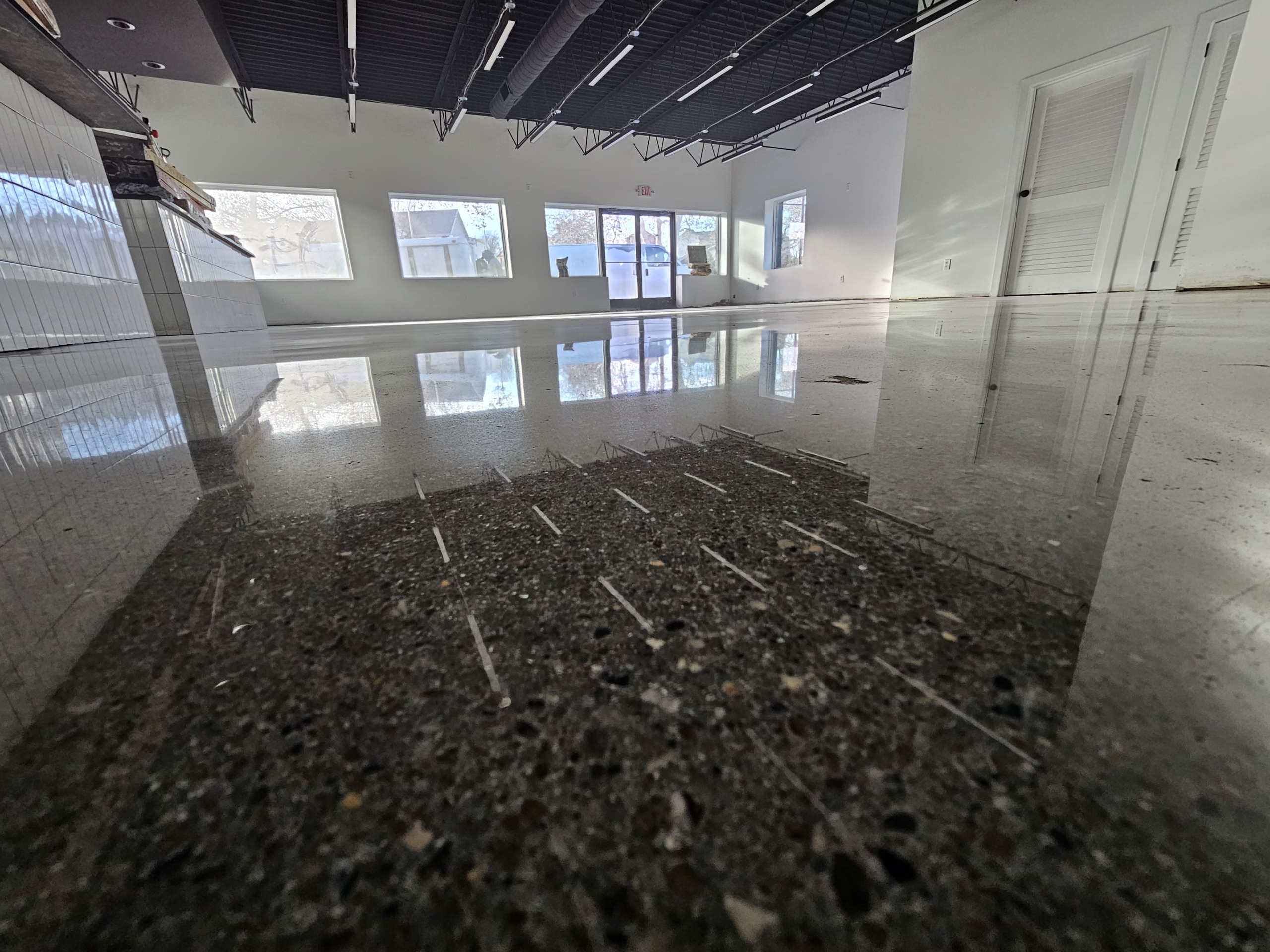
That’s why more Oklahoma facilities are upgrading to epoxy and polyaspartic industrial flooring systems from Zone Garage OKC. These floors directly support OSHA regulations by creating a safer, more organized, and more compliant workspace.
Here’s how epoxy flooring helps your facility stay aligned with OSHA safety standards.
1. Slip-Resistant Surfaces Reduce Workplace Accidents
OSHA requires employers to maintain walking and working surfaces free from hazards. Bare concrete can become dangerously slippery due to:
- Water
- Oils
- Coolant
- Grease
- Dust
- Chemical spills
Epoxy floors improve slip resistance with:
✔️ Quartz additives
✔️ Silica texture
✔️ Fine or coarse traction blends
✔️ Non-slip polyaspartic topcoats
This dramatically reduces slip-and-fall incidents — a core OSHA compliance requirement.
2. High-Visibility Markings Support OSHA Safety Zone Standards
OSHA requires clearly marked:
- Walkways
- Exit routes
- Hazard zones
- Equipment boundaries
- Loading areas
- Forklift paths
Epoxy flooring allows Zone Garage OKC to install:
✔️ Color-coded safety stripes
✔️ Marked forklift lanes
✔️ Emergency egress pathways
✔️ Caution zones for machinery
✔️ High-contrast hazard markings
These markings are bonded directly into the coating, making them long-lasting and compliant.
3. Chemical Resistance Helps Meet OSHA Hazard Communications Requirements
Industrial facilities work with:
- Oils
- Solvents
- Adhesives
- Cleaning chemicals
- Coolants
- Degreasers
- Hazardous fluids
OSHA requires surfaces that can safely handle chemical exposure.
Epoxy flooring is:
✔️ Non-porous
✔️ Chemical-resistant
✔️ Spill-resistant
✔️ Easy to decontaminate
This mitigates slip hazards and prevents chemical absorption into concrete.
4. Eliminates Concrete Dusting for Better Air Quality
OSHA has strict requirements related to airborne particulates.
Bare concrete releases respirable dust, contributing to:
- Poor air quality
- Worker respiratory issues
- Contaminated inventory
- Equipment failure
Epoxy flooring eliminates concrete dusting 100%, supporting OSHA air quality standards in industrial workplaces.
5. Creates Smooth, Even Surfaces for Safer Footing
OSHA requires employers to maintain surfaces free from:
- Tripping hazards
- Uneven substrates
- Holes or cracks
- Pitted concrete
Epoxy flooring repairs:
✔️ Cracks
✔️ Pitting
✔️ Spalling
✔️ Surface wear
✔️ Uneven slabs
Workers benefit from a smooth, stable floor that greatly reduces tripping hazards.
6. Improved Lighting Visibility Supports OSHA Illumination Standards
OSHA mandates adequate lighting levels in industrial facilities.
Epoxy floors improve workspace visibility because their reflective finish increases lighting efficiency:
✔️ Brighter walkways
✔️ Clearer hazard markings
✔️ Cleaner, more visible surface conditions
✔️ Reduced shadowed areas
Safer visibility leads to fewer accidents.
7. Thermal & Impact Resistance Enhances Facility Safety
OSHA requires employers to protect workers from hazards related to heat, impact, and environmental conditions.
Epoxy floors provide:
✔️ Heat resistance
✔️ Impact resistance
✔️ Surface protection from dropped tools and parts
✔️ Stable footing under heavy loads
This helps facilities maintain OSHA-approved working conditions.
8. Supports Cleanliness Requirements for Health & Sanitation
Industries such as food production, packaging, and assembly must maintain hygienic surfaces.
Epoxy flooring is:
✔️ Easy to clean
✔️ Non-porous
✔️ Resistant to moisture and bacteria
✔️ Able to be sanitized quickly
This aligns with OSHA standards for cleanliness and sanitation in industrial workspaces.
9. Reduces Maintenance Downtime — Improves Safety During Operations
OSHA emphasizes maintaining hazard-free conditions at all times.
Frequent repairs increase unsafe conditions and worker disruption.
Epoxy floors reduce:
✔️ Repairs
✔️ Surface degradation
✔️ Trip hazards
✔️ Leaks and spills
✔️ Blocked-off work zones
This allows your workspace to remain compliant day-to-day.
10. Helps Facilities Prepare for OSHA Inspections
A well-maintained epoxy floor helps businesses demonstrate compliance by:
✔️ Highlighting safety zones
✔️ Providing high-traction surfaces
✔️ Ensuring clean, clutter-free walk paths
✔️ Improving visibility of hazard areas
✔️ Reducing chemical and slip hazards
Epoxy flooring creates an environment that meets OSHA requirements consistently.
Why Oklahoma Industrial Facilities Choose Zone Garage OKC
Serving OKC, Edmond, Norman, Moore, Yukon, Mustang, and surrounding areas, Zone Garage OKC provides:
✔️ OSHA-supportive epoxy & polyaspartic floor coatings
✔️ Slip-resistant industrial flooring
✔️ Safety stripe integration
✔️ Moisture-resistant and chemical-resistant systems
✔️ Fast installation
✔️ 10–20 year durability
We install industrial floors designed to improve safety and help your facility stay OSHA compliant.
FAQs: OSHA Compliance & Epoxy Flooring
Does epoxy flooring help with OSHA walkway requirements?
Yes — we install clear, durable walk paths.
Can epoxy help reduce slip hazards?
Yes — traction additives significantly improve floor safety.
Will epoxy reduce dust and airborne hazards?
Absolutely — it eliminates concrete dusting.
Can epoxy withstand chemicals used in industrial plants?
Yes — epoxy is chemical-resistant and non-porous.
Does epoxy help during OSHA inspections?
Yes — it helps facilities meet multiple compliance points.