
Factory floors in Oklahoma City take a beating. Heavy machinery, forklifts, pallet jacks, rolling equipment, chemical spills, and continuous foot traffic all place intense demands on the flooring. While many facilities still rely on plain concrete slabs, more OKC factories are upgrading to industrial epoxy flooring because of its strength, safety benefits, and long-term cost efficiency.
If you’re deciding between standard concrete and epoxy coatings for your factory, here’s a detailed comparison — and why epoxy is the clear winner for Oklahoma’s manufacturing environments.
1. Strength & Durability: Epoxy Significantly Outperforms Concrete
Traditional Concrete
Concrete may seem strong, but it’s vulnerable to:
- Cracking
- Spalling
- Dusting
- Impact damage
- Vibration fatigue
These issues get worse under heavy industrial workloads.
Epoxy Flooring
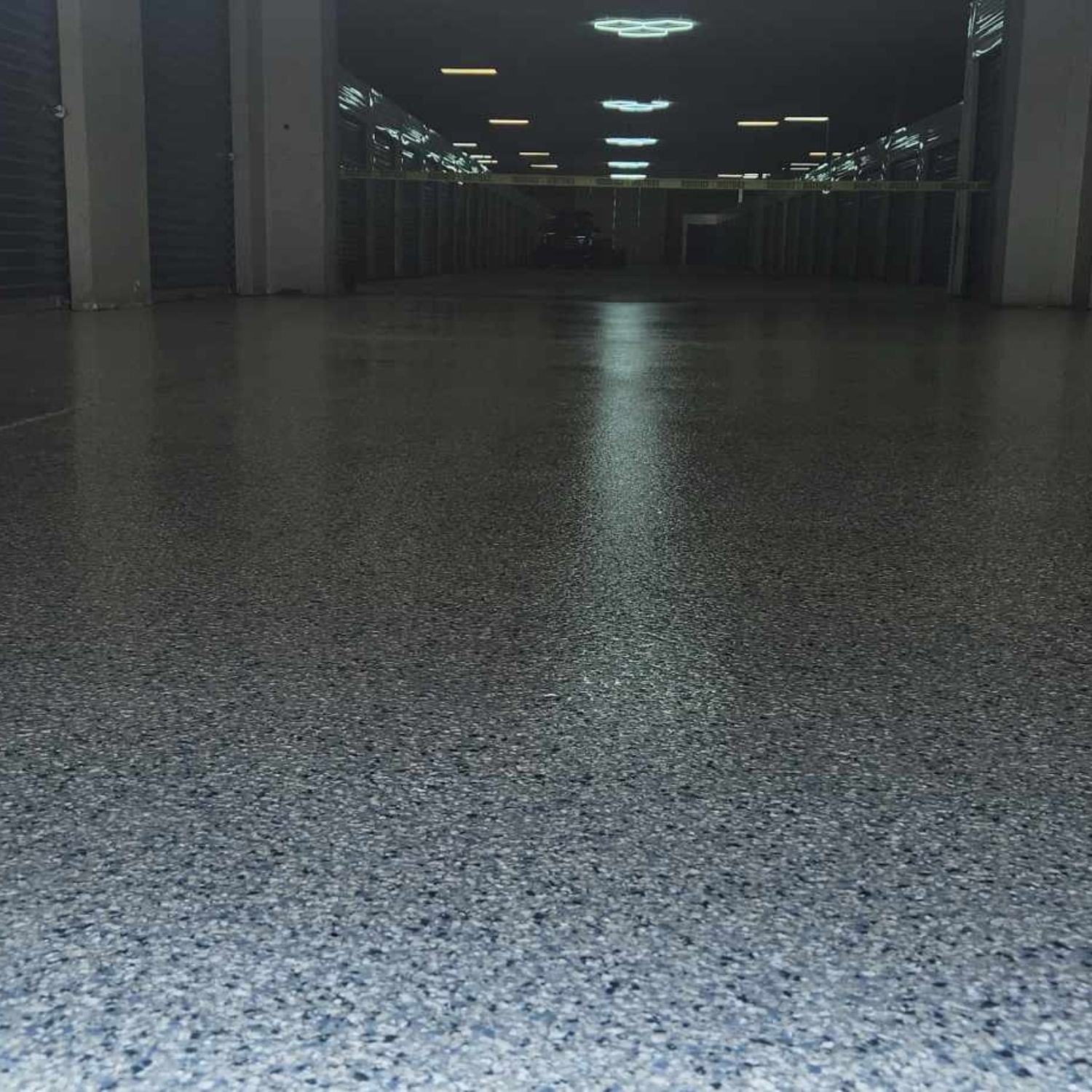
Epoxy creates a reinforced surface with 10,000–14,000 PSI compressive strength, offering:
✔️ Impact resistance
✔️ Abrasion resistance
✔️ Protection from machinery vibration
✔️ Long-lasting durability under forklifts
Epoxy prevents the wear and tear that destroys raw concrete over time.
2. Safety: Epoxy Enhances OSHA Compliance, Concrete Doesn’t
Traditional Concrete
Bare concrete becomes slippery when exposed to:
- Water
- Oil
- Coolant
- Dust
It also cracks easily — creating tripping hazards and OSHA violations.
Epoxy Flooring
Epoxy and polyaspartic coatings improve safety with:
✔️ Slip-resistant traction options
✔️ Seamless surfaces that eliminate trip hazards
✔️ Safety striping built into the coating
✔️ High visibility that enhances lighting
Factories get safer walkways, forklift lanes, and production zones.
3. Chemical Resistance: Concrete Absorbs, Epoxy Protects
Traditional Concrete
Concrete is porous, meaning it absorbs:
- Oil
- Grease
- Solvents
- Coolants
- Acids
- Water
This leads to stains, weakening, and expensive repairs.
Epoxy Flooring
Epoxy is fully non-porous, offering:
✔️ Chemical-resistant protection
✔️ Easy cleanup
✔️ No absorption
✔️ Protection against corrosive spills
This makes epoxy ideal for machining, metal fabrication, food production, and automotive facilities.
4. Cleanliness: Epoxy Eliminates Dust, Concrete Creates It
Traditional Concrete
Concrete naturally produces dust from surface breakdown. This dust:
- Damages machinery
- Contaminates products
- Creates slip hazards
- Affects air quality
- Requires constant cleaning
Epoxy Flooring
Epoxy seals the slab, creating:
✔️ A dust-free environment
✔️ A seamless, sanitary surface
✔️ Cleaner workstations
✔️ Reduced maintenance needs
Cleaner floors mean better operational efficiency.
5. Appearance: Epoxy Looks Professional, Concrete Looks Industrial
Traditional Concrete
Concrete often appears:
- Dull
- Patchy
- Stained
- Uneven
This affects employee morale and client impressions.
Epoxy Flooring
Epoxy creates a clean, modern look with:
✔️ High-gloss or matte finishes
✔️ Custom colors
✔️ Safety striping
✔️ Organized work zones
A polished facility boosts professionalism and workflow.
6. Installation Time: Epoxy Installs Fast, Concrete Repairs Take Longer
Traditional Concrete
Pouring new concrete or repairing existing slabs takes:
- Days to cure
- Days more before it can support weight
- Additional time for sealing (if done at all)
Epoxy Flooring
Fast-curing polyaspartic topcoats allow factories to resume operations within:
✔️ 24 hours
✔️ Often less for light traffic
✔️ Minimal disruption to production
Epoxy is ideal for factories that cannot shut down for long periods.
7. Maintenance Costs: Epoxy Is Far Cheaper Over Time
Traditional Concrete
Concrete requires ongoing:
- Repairs
- Repatching
- Resurfacing
- Cleaning
- Dust control
- Crack sealing
These costs add up quickly.
Epoxy Flooring
Epoxy requires:
✔️ Minimal upkeep
✔️ No waxing or sealing
✔️ Fewer repairs
✔️ Less downtime
Its lifespan of 10–20+ years saves factories significant money.
8. Resistance to Oklahoma Weather Conditions
Even indoor factory floors in Oklahoma are affected by:
- Humidity
- Temperature changes
- Moisture vapor
- Heat from machinery
Concrete expands, contracts, and cracks under these conditions.
Epoxy flooring withstands:
✔️ Moisture
✔️ Temperature shifts
✔️ Humidity
✔️ Impact
✔️ Wear
It stays stable and strong year-round.
9. Customization for Industrial Workflow
Epoxy flooring can be tailored to factory needs with:
✔️ Safety lines
✔️ Color zoning
✔️ Non-slip textures
✔️ Chemical-proof finishes
✔️ Forklift lanes
Concrete offers none of these options without expensive add-ons.
10. Overall Best Choice for OKC Factories: Epoxy Wins
When comparing:
| Feature | Epoxy Flooring | Traditional Concrete |
|---|---|---|
| Durability | ⭐⭐⭐⭐⭐ | ⭐⭐ |
| Safety | ⭐⭐⭐⭐⭐ | ⭐ |
| Chemical Resistance | ⭐⭐⭐⭐⭐ | ⭐ |
| Appearance | ⭐⭐⭐⭐⭐ | ⭐ |
| Maintenance | ⭐⭐⭐⭐⭐ | ⭐ |
| Installation Speed | ⭐⭐⭐⭐ | ⭐ |
| Long-Term Cost | ⭐⭐⭐⭐⭐ | ⭐ |
Epoxy clearly provides stronger, safer, and more cost-efficient floors for Oklahoma factories.
Why Oklahoma Factories Choose Zone Garage OKC
Serving OKC, Edmond, Moore, Norman, Mustang, and Yukon, Zone Garage OKC provides:
✔️ Industrial-grade epoxy & polyaspartic coatings
✔️ Slip-resistant, chemical-resistant surfaces
✔️ Fast 24-hour return-to-service
✔️ Concrete repair & crack restoration
✔️ Custom striping for OSHA compliance
✔️ Long-term durability for heavy machinery
We build flooring systems engineered for Oklahoma’s most demanding factories.
FAQs: Epoxy vs. Concrete for Factories
Is epoxy stronger than concrete?
Yes — epoxy enhances the surface strength dramatically.
Does epoxy help with OSHA compliance?
Absolutely — traction, striping, and smooth surfaces all help.
Will epoxy resist chemicals and coolants?
Yes — epoxy is fully chemical-resistant.
How long does epoxy last?
Typically 10–20+ years depending on usage.
Can epoxy handle forklifts and heavy machines?
Yes — it’s designed for heavy industrial loads.