
Aircraft hangars, aviation maintenance bays, and aerospace facilities in Oklahoma demand the highest level of flooring performance. Aviation operations involve heavy aircraft loads, fuel spills, hydraulic fluids, high operational temperatures, and strict safety standards — far beyond what ordinary concrete or paint can handle.
That’s why aviation facilities across Oklahoma City, Norman, Edmond, and Tinker AFB areas trust industrial-grade epoxy and polyaspartic flooring systems from Zone Garage OKC. These aviation-ready floors deliver unmatched strength, chemical resistance, and a clean, professional look that elevates both safety and operations.
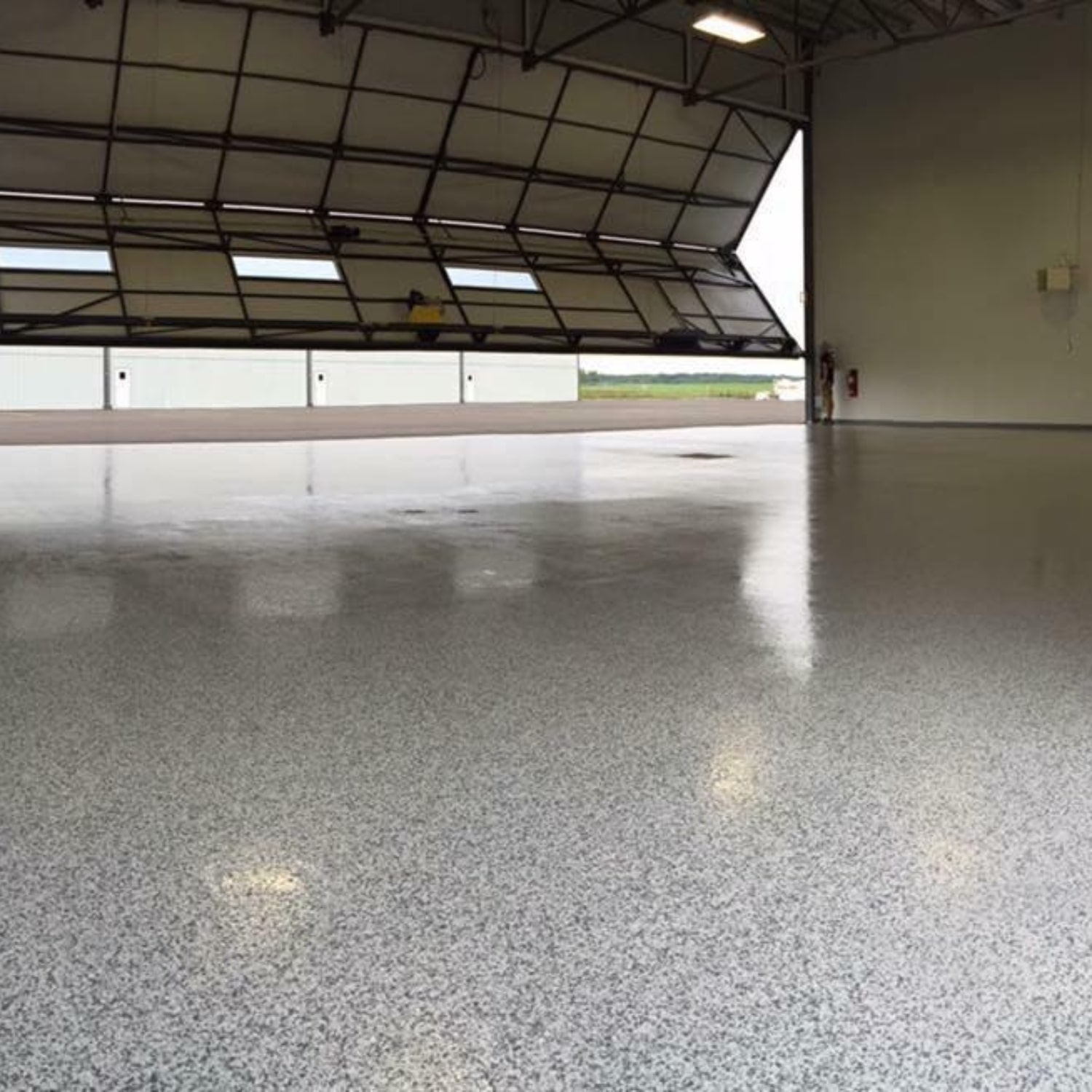
Here’s why epoxy flooring is the industry-leading choice for aviation environments.
1. Engineered to Withstand Aircraft Weight & Heavy Loads
Aircraft—from small private planes to corporate jets and helicopters—place tremendous pressure on hangar floors.
Epoxy floors from Zone Garage OKC offer:
✔️ 10,000–14,000 PSI compressive strength
✔️ Resistance to landing gear loads
✔️ Anti-abrasion for wheel turning
✔️ High impact resistance for tools & equipment
Unlike uncoated concrete, epoxy floors do not crack, dust, or weaken over time under aircraft weight.
2. Full Chemical Resistance Against Aviation Fluids
Aviation facilities use some of the most corrosive chemicals found in any industry, including:
- Jet fuel (Jet A / Avgas)
- Hydraulic fluids
- Lubricants
- Gear oil
- Skydrol
- De-icing chemicals
- Solvents
- Coolants
- Cleaning agents
Bare concrete absorbs these fluids, causing staining, chemical breakdown, and long-term structural deterioration.
Epoxy flooring provides:
✔️ Complete chemical resistance
✔️ Fuel-proof, oil-proof, solvent-proof surface
✔️ Non-porous barrier to protect the concrete
✔️ Easy cleanup of spills
Essential for maintaining FAA and industry safety standards.
3. Smooth, Seamless Flooring for Improved Safety & Efficiency
Aviation environments require safe, clean, and easily navigable surfaces.
Epoxy floors deliver:
✔️ Smooth movement for wheel chocks, dollies & maintenance carts
✔️ Seamless, trip-free surfaces
✔️ Slip-resistant traction options
✔️ Fully dust-free environment
This protects technicians, aircraft, and ground crews while improving workflow efficiency.
4. Bright, High-Gloss Finish Enhances Lighting & Visibility
Hangars are large, open spaces where lighting quality matters for:
- Inspections
- Maintenance
- Safety
- Aircraft detailing
- Documentation tasks
Epoxy flooring reflects light, providing:
✔️ Brighter working conditions
✔️ Increased visibility under aircraft
✔️ Reduced lighting energy costs
✔️ A clean, polished hangar appearance
The professional, high-gloss finish transforms the entire facility.
5. Protects Concrete from Aviation Wear & Corrosion
Hangar floors face damage from:
- Corrosive fluids
- Constant vibration
- Tool drops
- Heavy rolling equipment
- Extreme aircraft tire pressure
- Temperature shifts
Epoxy and polyaspartic coatings:
✔️ Strengthen the surface
✔️ Prevent pitting and spalling
✔️ Seal against moisture and chemicals
✔️ Reduce long-term concrete repair costs
Your facility floor becomes stronger than the original slab.
6. Slip-Resistant Options for Wet or Chemical-Prone Areas
Safety is critical in aviation.
Zone Garage OKC offers slip-resistant coatings tailored to:
✔️ Maintenance zones
✔️ Fueling areas
✔️ Entry zones
✔️ Wash stations
✔️ Tool drop areas
This helps aviation facilities meet OSHA and industry safety standards, reducing slip-and-fall incidents.
7. Easy Cleaning & Maintenance for High-Standard Environments
Hangars must stay clean to protect:
- Aircraft exteriors
- Sensitive electronics
- Landing gear systems
- Inspection quality
- Overall operational safety
Epoxy floors are:
✔️ Extremely easy to clean
✔️ Resistant to staining
✔️ Dust-proof
✔️ Quick to mop, squeegee, or wipe down
Perfect for aviation facilities that require pristine conditions.
8. UV-Stable Options for Hangars With Open Doors
Hangars often have:
- Massive roll-up doors
- Natural light exposure
- Outdoor-indoor transitions
Polyaspartic topcoats are 100% UV-stable, preventing:
✔️ Fading
✔️ Yellowing
✔️ Sun damage
Your floor stays bright and professional-looking for years.
9. Custom Safety Striping & Organization Zones
Aviation facilities rely on clear organization for safety.
Zone Garage OKC integrates:
✔️ Taxiway markings
✔️ Gear placement zones
✔️ Tool and equipment areas
✔️ Caution zones
✔️ Walkways and pathways
✔️ Emergency exit striping
These markings bond directly to the epoxy — far more durable than paint or tape.
10. Modern, Professional Aesthetic for High-End Aviation Clients
A well-designed epoxy floor enhances:
✔️ Safety
✔️ Functionality
✔️ Workspace cleanliness
✔️ Facility image
Whether you’re running a private hangar, a repair station, or an FBO, epoxy flooring elevates your branding and creates a premium experience for pilots, clients, and staff.
Perfect For: Oklahoma Aviation Facilities
Zone Garage OKC installs epoxy flooring for:
- Aircraft hangars
- Private jet hangars
- Helicopter facilities
- FBO terminals
- MRO facilities
- Military hangars
- Aviation manufacturing
- Aerospace testing environments
Any aviation operation benefits from industrial-grade epoxy.
Why Oklahoma Aviation Facilities Choose Zone Garage OKC
Serving OKC, Edmond, Norman, Moore, Yukon, Tinker AFB areas, and more, Zone Garage OKC delivers:
✔️ Aviation-grade epoxy & polyaspartic systems
✔️ Fuel- and chemical-resistant coatings
✔️ Slip-resistant, UV-stable finishes
✔️ Concrete repair & moisture mitigation
✔️ Custom safety striping
✔️ Quick installation with minimal downtime
✔️ 10–20 year durability
We build floors engineered for heavy aviation use and FAA-level cleanliness standards.
FAQs: Epoxy Floors for Aviation
Can epoxy floors handle aircraft weight?
Yes — epoxy provides extreme compressive strength ideal for aircraft.
Is epoxy resistant to jet fuel and Skydrol?
Absolutely — our systems resist all aviation fluids.
Does epoxy improve lighting in hangars?
Yes — reflective flooring significantly increases visibility.
Is epoxy safe for maintenance crews?
Yes — slip-resistant options enhance safety for techs and ground crews.
How long does the coating last?
Typically 10–20+ years, even under demanding aviation conditions.