
Aircraft maintenance facilities and hangars in Oklahoma City require the highest level of safety, organization, and operational efficiency. With constant aircraft movement, heavy equipment, fuel exposure, and sensitive repair procedures, the flooring plays a critical role in overall hangar performance.
Bare concrete can create slip hazards, collect dust, absorb fuel, and deteriorate under the extreme conditions of aviation environments. That’s why more aviation professionals across OKC, Norman, Edmond, Yukon, Tinker AFB, and surrounding areas are upgrading to industrial-grade epoxy and polyaspartic hangar flooring systems from Zone Garage OKC.
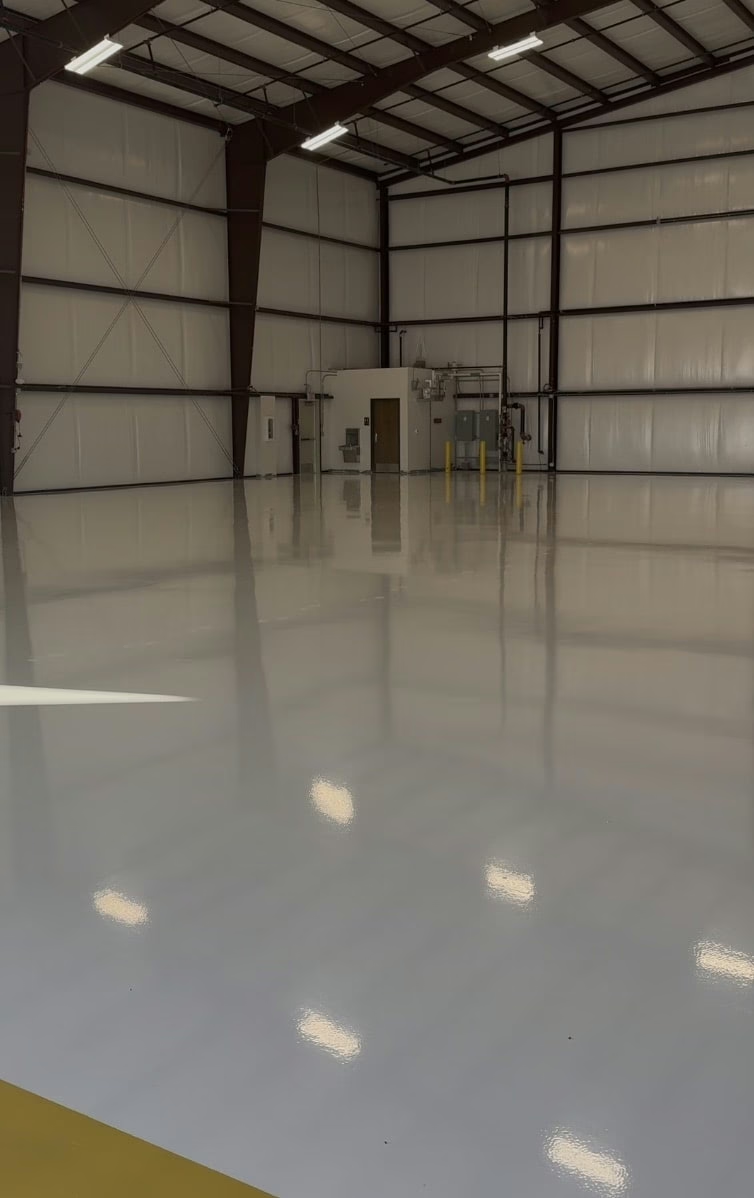
These floors directly support safer, more efficient aircraft maintenance and hangar operations.
Here’s how epoxy flooring improves safety and performance in aviation environments.
1. Slip-Resistant Surface Reduces Technician Injuries
Hangars are prone to spills and wet conditions from:
- Fuel
- Hydraulic fluid
- Lubricants
- Oil
- Cleaning agents
- Condensation
- Wash-down operations
Bare concrete becomes extremely slippery under these conditions.
Epoxy coatings enhance traction with:
✔️ Non-slip additives
✔️ Quartz or silica blends
✔️ Satin or textured finishes
This dramatically reduces slip-and-fall accidents — one of the most common hangar safety risks.
2. Chemical Resistance Protects Workers & Equipment
Aviation maintenance involves some of the harshest chemicals in the industry, including:
- Jet fuel (Jet A / Avgas)
- Skydrol hydraulic fluid
- Gear oil
- Degreasers
- Solvents
- Coolants
- Cleaning chemicals
These can corrode raw concrete and create unsafe work areas.
Epoxy flooring is chemically resistant and non-porous, preventing:
✔️ Surface corrosion
✔️ Long-term deterioration
✔️ Chemical absorption
✔️ Fire risks from soaked-in fuel
This protects both workers and aircraft.
3. High-Visibility Reflective Surface Improves Lighting
Hangar lighting is essential for accurate inspections and maintenance.
Epoxy floors have a naturally reflective finish that:
✔️ Brightens the hangar
✔️ Increases lighting efficiency
✔️ Improves visibility under aircraft
✔️ Supports precision inspection work
✔️ Helps technicians detect spills or hazards quickly
Better visibility = fewer mistakes and safer operations.
4. Eliminates Concrete Dust for Cleaner, Safer Maintenance Areas
Concrete dust can contaminate:
- Aircraft parts
- Tools
- Avionics
- Hydraulic systems
- Lubrication points
- Sensitive electronics
Epoxy flooring completely eliminates concrete dusting, ensuring a cleaner environment that protects high-value aircraft components.
5. Creates Clear, OSHA-Compliant Safety Markings
Hangars require clearly marked:
- Taxi lines
- Parking zones
- Walk pathways
- Equipment areas
- Hazard zones
- Emergency exits
- Tool staging areas
Zone Garage OKC integrates safety striping directly into the epoxy system:
✔️ Long-lasting
✔️ High-contrast
✔️ Highly visible
✔️ Resistant to wear from aircraft tires
No more peeling tape or fading paint.
6. Supports Smooth Aircraft & Equipment Movement
Aircraft and ground support equipment require smooth, even flooring for safe navigation.
Epoxy flooring provides:
✔️ Seamless transition zones
✔️ Smooth, polished movement paths
✔️ No cracks or lip hazards
✔️ Reduced rolling resistance for tugs and dollies
Technicians benefit from easier positioning of aircraft and equipment.
7. Prevents Fuel & Fluid Absorption — Reducing Fire Risk
Fuel-soaked concrete is a major safety hazard.
Epoxy protects hangars by:
✔️ Preventing fuel absorption
✔️ Repelling hazardous liquids
✔️ Reducing ignition risk
✔️ Allowing fast cleanup of flammable materials
A safer floor means a safer aircraft maintenance environment.
8. Quick Spill Cleanup Improves Maintenance Efficiency
Aviation environments cannot afford downtime due to spills.
Epoxy floors enable:
✔️ Fast squeegee cleanup
✔️ Easy spill containment
✔️ Rapid return to safe working conditions
✔️ Reduced downtime during maintenance cycles
This keeps aircraft turnaround times efficient.
9. Handles Heavy Aircraft Loads Without Deterioration
Landing gear and aircraft wheels exert enormous pressure on concrete.
Epoxy flooring strengthens the surface by offering:
✔️ High compressive strength
✔️ Resistance to wheel abrasion
✔️ Protection from chocking impact
✔️ Long-term structural performance
Perfect for everything from single-engine planes to corporate jets and helicopters.
10. Enhances the Professional Appearance of the Hangar
A clean, polished epoxy floor:
✔️ Communicates professionalism
✔️ Improves customer & pilot perception
✔️ Creates a premium environment
✔️ Reflects well on safety culture
Hangars with epoxy flooring look like world-class aviation facilities.
Why Aviation Facilities in Oklahoma Trust Zone Garage OKC
Serving OKC, Edmond, Moore, Norman, Yukon, Tinker AFB, and surrounding areas, Zone Garage OKC provides:
✔️ Aviation-grade epoxy & polyaspartic flooring
✔️ Fuel- and chemical-resistant systems
✔️ Slip-resistant, high-visibility finishes
✔️ Custom striping & organization zones
✔️ Moisture protection for Oklahoma humidity
✔️ Fast installation & long-term performance
✔️ 10–20 year durability
We build hangar floors that support maximum safety and operational excellence.
FAQs: Epoxy Floors for Hangar Safety
Is epoxy safe for aircraft hangars?
Yes — it’s ideal for aviation due to strength, traction, and chemical resistance.
How does epoxy help with OSHA compliance?
Slip resistance, safety striping, and improved lighting support multiple OSHA guidelines.
Will jet fuel damage the epoxy?
No — our systems resist jet fuel, Skydrol, solvents, and more.
Does epoxy improve visibility?
Yes — the reflective surface enhances lighting across the hangar.
How long does the floor last?
Typically 10–20+ years in aviation conditions.