Mechanics in Oklahoma City need flooring that can handle some of the harshest conditions of any workplace: oil spills, hot tires, dropped tools, rolling equipment, chemicals, and nonstop vehicle traffic. Many shop owners debate whether tile or epoxy is the better long-term flooring option.
The truth?
Epoxy (especially industrial-grade epoxy + polyaspartic systems) outperforms tile in almost every category for Oklahoma mechanic shops.
If you’re upgrading a service bay, auto shop, fleet garage, or repair facility, here is the full comparison — and why epoxy is the clear winner.
1. Durability: Epoxy Wins by a Mile
Mechanic shop floors endure:
- Heavy trucks and SUVs
- Rolling toolboxes
- Jack stands
- Impact from tools
- Oil & coolant spills
- Hot tires
- Harsh cleaning chemicals
Tile Problems:
- Cracks under heavy weight
- Chips from dropped tools
- Grout lines break down
- Tiles loosen from heat or moisture
- Hot tires can cause lifting
Epoxy Advantages:
✔️ 10,000–14,000 PSI compressive strength
✔️ No cracking under heavy machinery
✔️ Impact-resistant
✔️ Seamless, no weak points
✔️ Withstands hot tires and friction
Epoxy is built for industrial use. Tile simply isn’t.
2. Chemical Resistance: Epoxy Is Superior
Mechanic shops deal with:
- Motor oil
- Transmission fluid
- Brake fluid
- Gasoline
- Coolant
- Degreasers
- Solvents
- Cleaning chemicals
Tile Problems:
- Grout absorbs chemicals
- Stains form quickly
- Some cleaners erode grout
- Tile becomes slick when contaminated
Epoxy Advantages:
✔️ Non-porous
✔️ Fully chemical-resistant
✔️ Stain-proof
✔️ Easy to disinfect
✔️ Zero grout = zero absorption
Epoxy is engineered for chemical-heavy environments.
3. Maintenance: Epoxy Is Far Easier & Cheaper
Tile Maintenance Issues:
- Grout requires constant scrubbing
- Stains become permanent
- Tiles loosen over time
- Repairs are costly
- Dirt traps between grout lines
Epoxy Maintenance:
✔️ Sweep
✔️ Squeegee
✔️ Mop
✔️ Done
No grout. No seams. No tile replacement.
Epoxy stays clean with minimal effort.
4. Safety: Epoxy Offers Better Slip-Resistance
OSHA safety matters in any mechanic shop.
Tile Risks:
- Slick when wet
- Grout becomes slippery with oil
- Uneven surfaces create trip hazards
- Cracked tiles cause injuries
Epoxy Benefits:
✔️ Slip-resistant additives
✔️ Quartz or silica traction
✔️ Seamless surface
✔️ Safer around oil and coolant spills
Epoxy helps reduce slip-and-fall incidents significantly.
5. Appearance: Epoxy Looks More Professional
Customers notice the shop floor. A professional environment builds trust.
Tile Appearance Issues:
- Grout stains
- Tiles discolor
- Lines look uneven
- Dirt sticks between tiles
- Cracks look unprofessional
Epoxy Benefits:
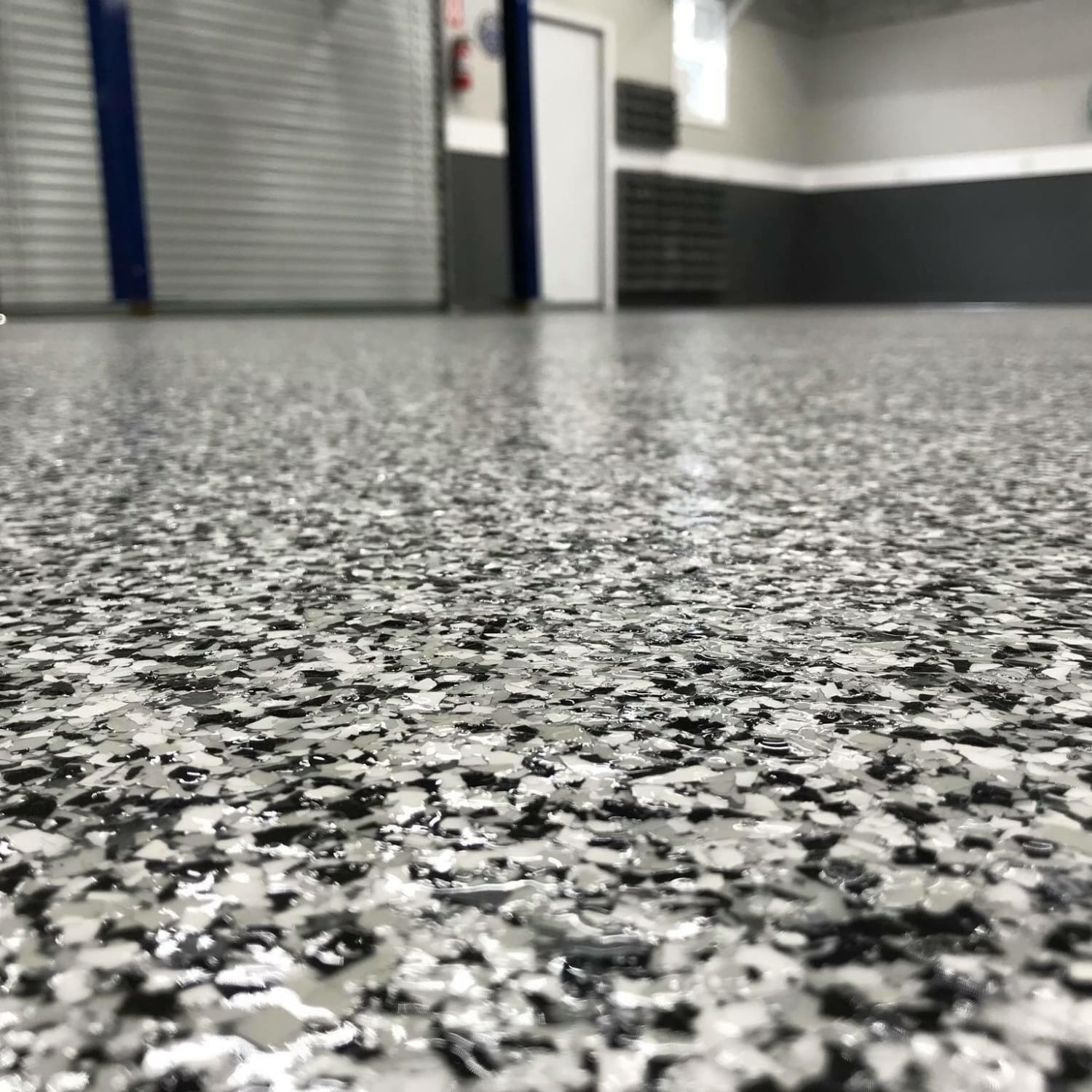
✔️ Clean, glossy finish
✔️ Reflective surface improves lighting
✔️ Professional, uniform appearance
✔️ No staining
✔️ Modern automotive aesthetic
Epoxy creates a dealership-level service bay look.
6. Installation Speed: Epoxy Is Much Faster
Tile Installation:
- Days of downtime
- Grout curing time
- Tile setting
- Messy cleanup
- Often requires multi-day closure
Epoxy Installation:
✔️ Often completed in 1 day
✔️ Polyaspartic topcoat cures in hours
✔️ Minimal disruption
✔️ Fast return to full operation
Factory, fleet, and mechanic shops love the reduced downtime.
7. Long-Term Cost: Epoxy Costs Less Over Time
Tile may seem cheaper initially, but long-term maintenance destroys its value.
Tile Costs Over Time:
- Grout repair
- Tile replacement
- Regrouting
- Water/moisture damage
- Frequent deep cleaning
Epoxy Costs Over Time:
✔️ Little maintenance
✔️ Fewer repairs
✔️ Lasts 10–20+ years
✔️ No replacing sections
✔️ No grout problems
Epoxy delivers significantly higher ROI for Oklahoma mechanic shops.
8. Oklahoma Climate: Epoxy Handles It Better
Oklahoma’s extreme weather causes tile to fail faster.
Tile struggles with:
- Freeze-thaw cycles
- Moisture intrusion
- Grout expansion
- Heat cracking
Epoxy thrives in:
✔️ Heat
✔️ Humidity
✔️ Cold snaps
✔️ Moisture
✔️ Rapid temperature swings
Epoxy is designed for Oklahoma’s unpredictable climate.
9. Customization: Epoxy Offers More Options
Tile patterns are limited.
Epoxy offers:
✔️ Solid color coatings
✔️ Full-flake systems
✔️ Metallic finishes
✔️ Safety striping
✔️ Custom color zones
✔️ High-gloss OR satin
Mechanics can customize floors to improve workflow and branding.
10. Perfect for All Types of Oklahoma Mechanic Shops
Zone Garage OKC installs epoxy floors for:
- Auto repair shops
- Dealership service bays
- Fleet garages
- Diesel mechanics
- Oil & lube centers
- Tire shops
- Performance shops
- Car wash prep bays
- Detail centers
Wherever vehicles roll in, epoxy is the best-performing flooring solution.
Final Verdict: Epoxy Wins for Oklahoma Mechanics — Every Time
Tile may work for kitchens and bathrooms, but not for heavy automotive environments.
Epoxy is stronger, safer, cleaner, longer-lasting, and far more professional.
Why Mechanics Across Oklahoma Choose Zone Garage OKC
Serving OKC, Edmond, Moore, Norman, Yukon, Mustang, Midwest City, and more, Zone Garage OKC delivers:
✔️ Industrial-grade epoxy & polyaspartic systems
✔️ Slip-resistant finishes
✔️ Chemical-resistant surfaces
✔️ Repairs for cracked or damaged concrete
✔️ One-day installation
✔️ 10–20 year durability
✔️ Floors engineered for auto service environments
We build shop floors that can handle Oklahoma’s toughest mechanic work.
FAQs: Epoxy vs. Tile for Auto Shops
Is tile good for car service areas?
Not ideal — it cracks and stains easily.
Is epoxy safe around oil and chemicals?
Yes — epoxy is fully chemical-resistant.
Can epoxy handle heavy lifting equipment?
Absolutely — it has extremely high compressive strength.
How long does epoxy last in a mechanic shop?
Typically 10–20 years.
Does epoxy help with OSHA requirements?
Yes — with slip-resistant and high-visibility options.